Nous utilisons des cookies pour améliorer votre expérience. Pour nous conformer à la nouvelle directive sur la vie privée, nous devons demander votre consentement à l’utilisation de ces cookies. En savoir plus.

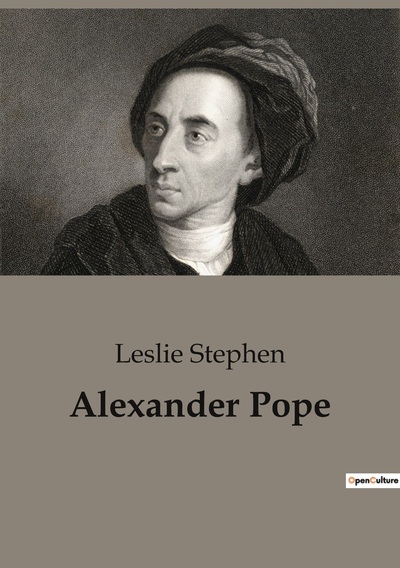
Alexander Pope
EAN : 9791041945382
Édition papier
EAN : 9791041945382
Paru le : 22 févr. 2023
21,00 €
19,91 €
Disponible
Pour connaître votre prix et commander, identifiez-vous
Notre engagement qualité
-
 Livraison gratuite
en France sans minimum
de commande -
 Manquants maintenus
en commande
automatiquement -
 Un interlocuteur
unique pour toutes
vos commandes -
 Toutes les licences
numériques du marché
au tarif éditeur -
 Assistance téléphonique
personalisée sur le
numérique -
 Service client
Du Lundi au vendredi
de 9h à 18h
- EAN13 : 9791041945382
- Réf. fournisseur : 267968
- Date Parution : 22 févr. 2023
- Disponibilite : Disponible
- Barème de remise : NS
- Nombre de pages : 126
- Format : H:210 mm L:148 mm E:7 mm
- Poids : 174gr
- Résumé : The early literary career of Alexander Pope, as detailed in Leslie Stephen's work, highlights the poet's rapid ascent to fame and the influences that shaped his writing. Born in 1688 to a Catholic family, Pope faced societal restrictions due to his religion, which limited his educational opportunities and career paths. Despite these challenges, he demonstrated an early passion for literature, immersing himself in the works of classical and contemporary poets. His early writings, including translations and pastorals, were exercises in mastering versification, though they lacked the depth of his later works. Pope's "Essay on Criticism," published in 1711, marked a significant milestone, showcasing his ability to articulate the principles of good writing and criticism. The essay, though rooted in the commonplaces of the time, was praised for its polished expression and aphoristic style. Pope's adherence to the classical ideals of wit, sense, and nature, as well as his reverence for the works of Dryden and other classical authors, defined his approach to poetry. His early success was further bolstered by the support of influential figures such as Sir William Trumbull and William Walsh, who recognized his potential and encouraged his literary pursuits. Despite his achievements, Pope's early career was not without controversy, as evidenced by his quarrel with the dramatist Wycherley over the revision of the latter's works. This period of Pope's life set the stage for his later accomplishments, establishing him as a leading figure in English literature.