Nous utilisons des cookies pour améliorer votre expérience. Pour nous conformer à la nouvelle directive sur la vie privée, nous devons demander votre consentement à l’utilisation de ces cookies. En savoir plus.

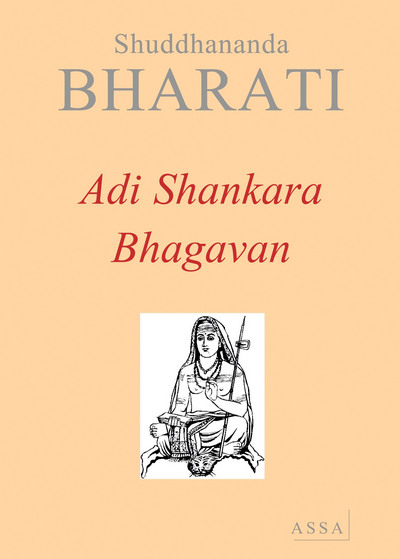
ADI SANKARA BHAGAVAN - THE TORCH OF VEDA VEDANTA
Assa - EAN : 9782940393343
Édition papier
EAN : 9782940393343
Paru le : 11 mai 2012
18,00 €
17,06 €
Disponible
Pour connaître votre prix et commander, identifiez-vous
Notre engagement qualité
-
 Livraison gratuite
en France sans minimum
de commande -
 Manquants maintenus
en commande
automatiquement -
 Un interlocuteur
unique pour toutes
vos commandes -
 Toutes les licences
numériques du marché
au tarif éditeur -
 Assistance téléphonique
personalisée sur le
numérique -
 Service client
Du Lundi au vendredi
de 9h à 18h
- EAN13 : 9782940393343
- Réf. fournisseur : 045
- Collection : COLLECTION ASSA
- Editeur : Assa
- Date Parution : 11 mai 2012
- Disponibilite : Disponible
- Barème de remise : NS
- Nombre de pages : 193
- Format : 1.50 x 14.80 x 21.00 cm
- Poids : 310gr
-
Résumé :
Adi Shankara Bhagavan
Adi Shankara (788 CE - 820 CE), also known as Sankara Bhagavatpadacarya and Adi Ankaracarya, was an Indian philosopher who consolidated the doctrine of Advaita Vedanta, a sub-school of Vedanta. His teachings are based on the unity of the soul and Brahman, in which Brahman is viewed as without attributes. In the Smarta tradition, Adi Shankara is regarded as an incarnation of Shiva. Shankara travelled across India to propagate his philosophy through discourses and debates with other thinkers. He founded four mathas (monasteries), which helped in the historical development, revival and spread of post-Buddhist Hinduism and Advaita Vedanta.
Adi Shankara is believed to be the founder of the Dashanami monastic order and the Shanmata tradition of worship. His works in Sanskrit, all of which are extant today, concern themselves with establishing the doctrine of Advaita (Nondualism). Adi Shankara quotes extensively from the Upanishads and other Hindu scriptures in support of his philosophy. Also, his works contain arguments against opposing schools of thought like Samkhya and Buddhism.
The religion of Bharat is Vedanta. The preceptor of Vedanta was Adi Sankara, whose fame had spread all around the world. The yoeman service that he had done to the field of education within a short span of thirty-two years is remarkable. His work is eternal. Sankara’s words are accepted by the entire world. Sankara’s entire life can be termed as sacrifice for the cause of knowledge.
This book has been written to enable the young in our country to know something about the wonderful life that Sankara led and his teachings. The life of Sankara would enrich the minds of our young people and thus make our future India bright. It was with this intention that this book was written.
Editions ASSA, Christian Piaget -
Biographie :
Presentation of Dr. Shuddhananda Bharati 11th May 1897 – 7th March 1990
The wise one to the cosmic age.
Although more than 90 years old, in his school in the south of India, Kavi Yogi Maharishi (great divine visionary, wise poet), Dr. Shuddhananda Bharati worked like a young man of twenty. When he was asked his age, he answered: “My age is Courage!”
The Yogi wrote several hundred works in English, French, Tamil, Hindi, Telugu and Sanskrit: five thousand songs, and fifteen hundred poems in French. The magnum opus of the man conscious of the presence of God in him, Bharata Shakti, (in 50,000 verses) described his ideal: only One Humanity living in communion with only One God in a transformed world! Bharata Shakti is a monumental and unique work. The Yogi depicts the essence of all the religions, of all the prophets and saints, all the approaches of Yoga and all the cultures on an allegorical table. It is a book for any age which all spiritual researchers and all nations should read and meditate on. This work was completed and appreciated by Sri Aurobindo, the Mother, Mahatma Gandhi, Rabindranath Tagore, Romain Rolland, Annie Besant, Bertrand Russell, George Bernard Shaw and so many others. It installs the author among the great, men such as Dante, Homer, Racine, Shakespeare, Vyasa, and Valmiki.
Dr. Shuddhananda Bharati is one of the greatest Tamil poet, having translated into this language: Gita, Upanishads, Veda, the Bible, the Koran, Avesta, the Buddha-Dhamma-Sangha and Tattvartha Sutra, the life and teachings of Lao-Tseu and Confucius. From their original languages, he also translated into Tamil The Divine Comedy of Dante, the tragedies of Racine, the comedies of Molière, the dramas of Corneille, Shakespeare, Goethe and the novels of Anatole France, Victor Hugo, Alexandre Dumas and others.
Shuddhananda’s works are innumerable. Malcolm Macdonald, who chaired the Congress on the Unity of the Conscience in Singapore, said in his short speech about him: “He is such a remarkable man, having such a diversity of raised gifts, that it is difficult to know where to start and where to finish when one speaks about Kavi Yogi Dr. Shuddhananda Bharati. Few men have achieved as many things in only one human life.” His name appears moreover in the Encyclopaedia of the World’s Great Men, which says: “Dr. Shuddhananda Bharati is the author of literary works of varied styles: works epic and lyric, melodramas, operas, comedies, pastoral, romance, novels, biographies, commentaries on famous works and texts. Bharata Shakti is his magnum opus.” He had a presentiment that he would receive the Nobel Prize for Peace or for Literature but did not live to see it. His commitment is summarized in his book celebrating his life, “Experiences of a Pilgrim Soul (Expérience d’une Âme de Pèlerin)”.
God I loved and lived in him,
Making His commandment
Leave to Man his entire talents
This is my will! Dr. Shuddhanananda Bharati
Editions ASSA, Christian Piaget