Nous utilisons des cookies pour améliorer votre expérience. Pour nous conformer à la nouvelle directive sur la vie privée, nous devons demander votre consentement à l’utilisation de ces cookies. En savoir plus.

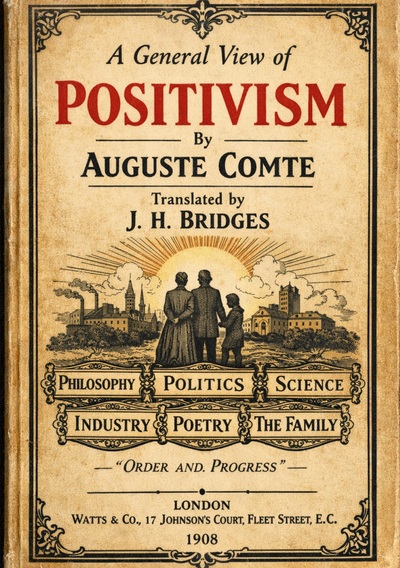
A General View of Positivism
EAN : 9791043140037
Édition papier
EAN : 9791043140037
Paru le : 5 mars 2026
26,95 €
25,55 €
Disponible
Pour connaître votre prix et commander, identifiez-vous
Notre engagement qualité
-
 Livraison gratuite
en France sans minimum
de commande -
 Manquants maintenus
en commande
automatiquement -
 Un interlocuteur
unique pour toutes
vos commandes -
 Toutes les licences
numériques du marché
au tarif éditeur -
 Assistance téléphonique
personalisée sur le
numérique -
 Service client
Du Lundi au vendredi
de 9h à 18h
- EAN13 : 9791043140037
- Réf. fournisseur : 441853
- Date Parution : 5 mars 2026
- Disponibilite : Disponible
- Barème de remise : NS
- Nombre de pages : 458
- Format : H:210 mm L:148 mm E:25 mm
- Poids : 588gr
- Résumé : Auguste Comte, considered by some to be the first "philosopher of science," was perhaps most famous for founding the theory of Positivism: a framework of thinking and living meant to engender unity across humanity, backed by love, science, and intellect.Positivism itself is a combination philosophy and way of life. Here Comte lays down the various tenets of the philosophy, describing what he views as the six major characteristics of the system. Comte goes into surprising detail, going so far as to describe minutiae like how children should be educated, the structure of a unified global committee of nations, new flags, calendars, the role of the arts, and so on. He ends the book with what he calls the "Religion of Humanity," a secular religion meant to replace the traditional religions that people of the time were becoming disillusioned with.The book and the theory are both very much products of the time. Comte was born around the end of the French Revolution, and lived in Paris during that time when republican ideas, respect for science, and a revolutionary and forward-thinking spirit made fertile ground for change. He viewed Positivism as the single solution to most of the problems of the day, including Communism, the plight of the working class, the shift away from traditional religion, and the constant war and strife that had plagued humanity.Comte's theories gained a huge following: you might even recognize the Positivist motto, "Order and Progress," inscribed on Brazil's national flag. While Positivism and its executive arm, the Church of Humanity, today only seem to survive in any significant number in Brazil—and even there in a greatly declined state—its theories were hugely influential in the emergence of many "ethical societies" and secular church movements around the globe.