Nous utilisons des cookies pour améliorer votre expérience. Pour nous conformer à la nouvelle directive sur la vie privée, nous devons demander votre consentement à l’utilisation de ces cookies. En savoir plus.

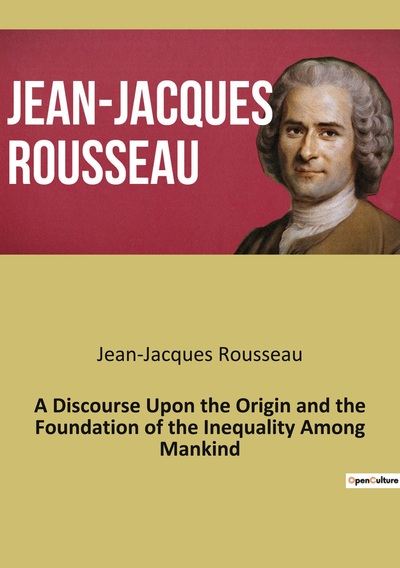
A Discourse Upon the Origin and the Foundation of the Inequality Among Mankind
EAN : 9791041940905
Édition papier
EAN : 9791041940905
Paru le : 17 déc. 2022
10,99 €
10,42 €
Disponible
Pour connaître votre prix et commander, identifiez-vous
Notre engagement qualité
-
 Livraison gratuite
en France sans minimum
de commande -
 Manquants maintenus
en commande
automatiquement -
 Un interlocuteur
unique pour toutes
vos commandes -
 Toutes les licences
numériques du marché
au tarif éditeur -
 Assistance téléphonique
personalisée sur le
numérique -
 Service client
Du Lundi au vendredi
de 9h à 18h
- EAN13 : 9791041940905
- Réf. fournisseur : 257245
- Date Parution : 17 déc. 2022
- Disponibilite : Disponible
- Barème de remise : NS
- Nombre de pages : 78
- Format : H:210 mm L:148 mm E:5 mm
- Poids : 114gr
- Résumé : In "A Discourse Upon the Origin and the Foundation of the Inequality Among Mankind," Jean-Jacques Rousseau delves into the nature and origins of human inequality. Rousseau distinguishes between two types of inequality: natural or physical inequality, which arises from differences in age, health, and physical attributes, and moral or political inequality, which is established by societal conventions and manifests in disparities of wealth, honor, and power. He argues that natural inequality is inherent and unavoidable, while moral inequality is a construct of human society. Rousseau critiques the philosophers who have attempted to trace the origins of society back to a state of nature, suggesting that they have often projected societal concepts onto this primitive state. He posits that in the state of nature, humans were solitary, equal, and free, driven by basic needs and instincts rather than complex desires and shifts. Rousseau suggests that the development of language, property, and social structures led to the emergence of moral inequality, as these developments created dependencies and hierarchies. He challenges the notion that civilization has improved human morality, suggesting instead that it has introduced new forms of corruption and vice. Rousseau's discourse invites readers to reflect on the nature of human progress and the true cost of societal advancement.
- Biographie : Jean-Jacques Rousseau, né le 28 juin 1712 à Genève et mort le 2 juillet 1778 à Ermenonville, est un écrivain, philosophe et musicien genevois francophone. Orphelin de mère très jeune, sa vie est marquée par l'errance.