Nous utilisons des cookies pour améliorer votre expérience. Pour nous conformer à la nouvelle directive sur la vie privée, nous devons demander votre consentement à l’utilisation de ces cookies. En savoir plus.

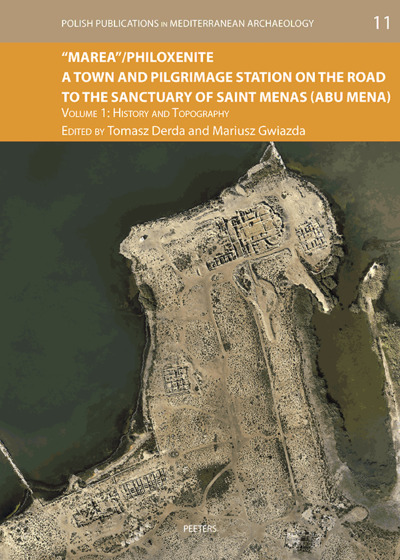
"Marea"/Philoxenite: A Town and Pilgrimage Station on the Road to the Sanctuary of Saint Menas (Abu Mena). Volume 1
EAN : 9789042957503
Édition papier
EAN : 9789042957503
Paru le : 31 déc. 2025
79,50 €
75,36 €
Disponible
Pour connaître votre prix et commander, identifiez-vous
Notre engagement qualité
-
 Livraison gratuite
en France sans minimum
de commande -
 Manquants maintenus
en commande
automatiquement -
 Un interlocuteur
unique pour toutes
vos commandes -
 Toutes les licences
numériques du marché
au tarif éditeur -
 Assistance téléphonique
personalisée sur le
numérique -
 Service client
Du Lundi au vendredi
de 9h à 18h
- EAN13 : 9789042957503
- Collection : POLISH PUBLICAT
- Date Parution : 31 déc. 2025
- Disponibilite : Disponible
- Barème de remise : NS
- Nombre de pages : 227
- Format : 1.60 x 29.00 x 24.00 cm
- Poids : 980gr
-
Résumé :
Philoxenite was a Byzantine foundation established on the southern shore of Lake Mareotis in the sixth century AD. Conceived as a station for pilgrims
en route
to the sanctuary of St Menas at Abu Mena, it was founded by Flavius Theodorus Philoxenus Soterichus, consul of the East in 525. For nearly two centuries, the town provided accommodation, infrastructure, and services for the expanding movement of Christian pilgrims.
This first volume of the new series “Marea”/Philoxenite. A Town and Pilgrimage Station on the Road to the Sanctuary of Saint Menas (Abu Mena) brings together historical, topographical, and environmental perspectives on the site. It opens with an overview of the historical context of pilgrimage in the region and the role of Philoxenite within the wider network centred on Abu Mena. Subsequent chapters examine the town’s founder, the literary sources that mention it, and the transformations of the Mareotis region during the Byzantine and early Islamic periods.
The volume then turns to the archaeology of the site itself. It traces the history of exploration since the eighteenth century, proposes a division of the settlement into sectors, and analyses its urban layout. Non-invasive surveys, including extensive geomagnetic prospection, have revealed the structure of the town and its hinterland. Environmental studies provide further insights into local vegetation and climate change.
Taken together, these contributions present Philoxenite as a key component of the late antique pilgrimage landscape. The volume demonstrates what the town may have looked like and establishes a foundation for future, more detailed studies of its material culture.