Nous utilisons des cookies pour améliorer votre expérience. Pour nous conformer à la nouvelle directive sur la vie privée, nous devons demander votre consentement à l’utilisation de ces cookies. En savoir plus.

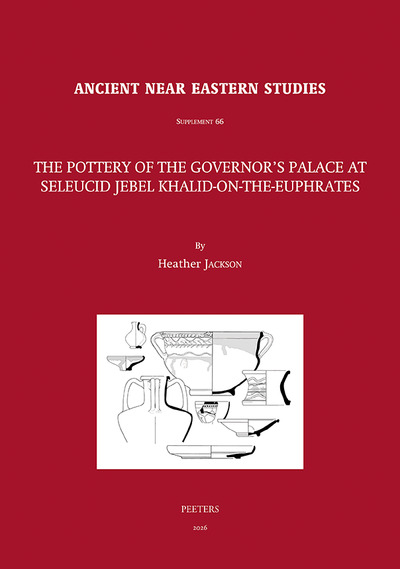
The Pottery of the Governor's Palace at Seleucid Jebel Khalid-on-the-Euphrates
EAN : 9789042951334
Édition papier
EAN : 9789042951334
Paru le : 17 juil. 2026
232,20 €
220,09 €
Disponible
Pour connaître votre prix et commander, identifiez-vous
Notre engagement qualité
-
 Livraison gratuite
en France sans minimum
de commande -
 Manquants maintenus
en commande
automatiquement -
 Un interlocuteur
unique pour toutes
vos commandes -
 Toutes les licences
numériques du marché
au tarif éditeur -
 Assistance téléphonique
personalisée sur le
numérique -
 Service client
Du Lundi au vendredi
de 9h à 18h
- EAN13 : 9789042951334
- Collection : ANCIENT NEAR EA
- Date Parution : 17 juil. 2026
- Disponibilite : Disponible
- Barème de remise : NS
- Nombre de pages : 382
- Format : 2.30 x 21.70 x 30.40 cm
- Poids : 1.67kg
-
Résumé :
Jebel Khalid is the site of a Seleucid settlement on the river Euphrates in North Syria, excavated by an Australian team between 1986 and 2010. This limestone plateau, situated near a crossing place, offered an ideal strategic position for monitoring both river and land traffic and trade. The settlement was established, on bedrock foundations in the reign of Seleucus I Nicator c. 300 BC but was abandoned by the middle of the first century BC. The largest building, set high on the Acropolis and separately walled, was the Governor’s Palace, which would have dominated the view for a long distance down- and up-river. Graeme Clarke directed its excavation from 1989 to 1996.
This volume publishes the pottery from that excavation. Previously published has been the domestic corpus of pottery from the excavated Housing Insula, affording a basis for comparison between palatial and domestic contexts. A pottery assemblage can tell us much about the life of the inhabitants: activities, preferences, customs and diet. Not surprisingly, the Palace assemblage contains considerable evidence of feasting. This evidence is particularly valuable today, when, as result of the Syrian civil war, the remains of the Palace have been bulldozed and the pottery itself lost.
The importance of the Palace assemblage is that it represents usage within a Seleucid administrative centre in the Late Hellenistic period. It is likely to be the only comprehensive survey of pottery so far published from a full-scale Seleucid Governor’s Palace.