Nous utilisons des cookies pour améliorer votre expérience. Pour nous conformer à la nouvelle directive sur la vie privée, nous devons demander votre consentement à l’utilisation de ces cookies. En savoir plus.

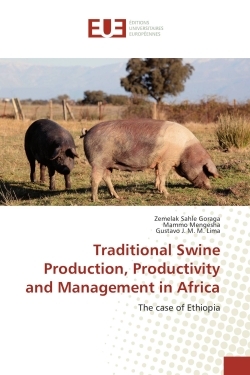
Traditional Swine Production, Productivity and Management in Africa
Univ Europeenne - EAN : 9783330878518
Édition papier
EAN : 9783330878518
Paru le : 1 nov. 2018
35,89 €
34,02 €
Disponible
Pour connaître votre prix et commander, identifiez-vous
Notre engagement qualité
-
 Livraison gratuite
en France sans minimum
de commande -
 Manquants maintenus
en commande
automatiquement -
 Un interlocuteur
unique pour toutes
vos commandes -
 Toutes les licences
numériques du marché
au tarif éditeur -
 Assistance téléphonique
personalisée sur le
numérique -
 Service client
Du Lundi au vendredi
de 9h à 18h
- EAN13 : 9783330878518
- Réf. fournisseur : 2922189
- Editeur : Univ Europeenne
- Date Parution : 1 nov. 2018
- Disponibilite : Disponible
- Barème de remise : NS
- Nombre de pages : 84
- Format : H:229 mm L:152 mm E:5 mm
- Poids : 137gr
- Interdit de retour : Retour interdit
- Résumé : This book provides an overall information on the socio-economic characteristics of swine producers, production systems, feeding, breed features, production and reproductive performance, breeding practice and constraints in the value chain. Our findings presented in this book were compared with the findings of similar studies conducted in different African countries so that the overall information presented in this book can represent the overall image of the swine production and its management practices in Africa. The Average reproductive performances of swine herds for age at first puberty, litter size and gestation length were ranged from 9 - 10 (months), 8 - 10 (piglets per farrowing) and 3 to 3.5 (months), respectively. The overall information provided in the book can support designing of community based breeding program which takes into consideration the breed selection criteria of the swine producers and the reproductive performance of the breeds in Africa. Furthermore, the key information generated from this study could support for developing research and development intervention strategies aiming to improve the swine sector and its economic benefit in the continent.