Nous utilisons des cookies pour améliorer votre expérience. Pour nous conformer à la nouvelle directive sur la vie privée, nous devons demander votre consentement à l’utilisation de ces cookies. En savoir plus.

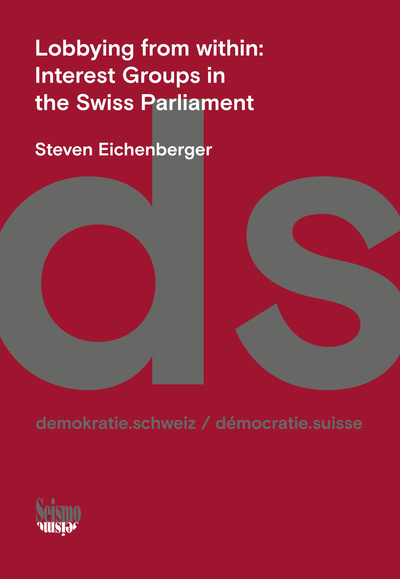
LOBBYING FROM WITHIN: INTEREST GROUPS IN THE SWISS PARLIAMENT
Seismo - EAN : 9783037773185
Édition papier
EAN : 9783037773185
Paru le : 31 déc. 2099
38,00 €
36,02 €
Bientôt disponible
Pour connaître votre prix et commander, identifiez-vous
A paraître 31 déc. 2099
Notre engagement qualité
-
 Livraison gratuite
en France sans minimum
de commande -
 Manquants maintenus
en commande
automatiquement -
 Un interlocuteur
unique pour toutes
vos commandes -
 Toutes les licences
numériques du marché
au tarif éditeur -
 Assistance téléphonique
personalisée sur le
numérique -
 Service client
Du Lundi au vendredi
de 9h à 18h
- EAN13 : 9783037773185
- Réf. fournisseur : 129536-69
- Collection : DS DEMOCRATIE
- Editeur : Seismo
- Date Parution : 31 déc. 2099
- Disponibilite : Pas encore paru
- Barème de remise : NS
- Nombre de pages : 220
- Format : 1.10 x 15.50 x 22.50 cm
- Poids : 300gr
-
Résumé :
In Swiss politics, federal politicians often wear several hats: they represent their voters but also serve as leaders or advisers in interest groups. These formal ties, long viewed with suspicion, have fueled the image of parliamentarians as puppets of organized interests. This book challenges that view. By comparing how politicians and citizens voted on issues decided both in the National Council and at the ballot box, it shows that formal ties rarely lead politicians to vote against their electorate, since group positions usually align with voters. Yet an analysis of 130 policy debates reveals a clear imbalance: business groups enjoy stronger parliamentary presence than citizen groups, especially in the Council of States and in legislative committees. The real risk of formal ties lies not in vote capture but in unequal access. With greater resources, business groups can cultivate more ties and rely on allies to introduce amendments, an advantage citizen groups struggle to match.
- Biographie : <p>Steven Eichenberger is a lecturer in Swiss politics and public policy at the University of Geneva. He holds a PhD from the University of Lausanne and was a visiting researcher at the University of Montreal. He teaches quantitative methods, and his research focuses on interest groups, lobbying, political representation, and expert advice to decision-makers.</p>