Nous utilisons des cookies pour améliorer votre expérience. Pour nous conformer à la nouvelle directive sur la vie privée, nous devons demander votre consentement à l’utilisation de ces cookies. En savoir plus.

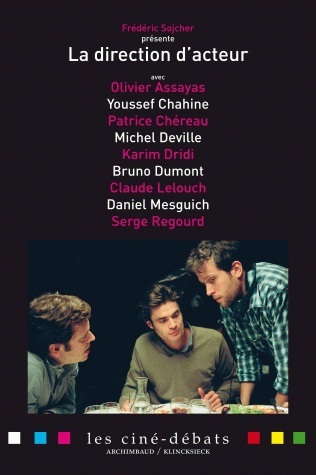
LA DIRECTION D'ACTEUR
Klincksieck - EAN : 9782252037980
Édition papier
EAN : 9782252037980
Paru le : 22 août 2011
25,00 €
23,70 €
Bientôt disponible
Pour connaître votre prix et commander, identifiez-vous
Manquant provisoirement
Notre engagement qualité
-
 Livraison gratuite
en France sans minimum
de commande -
 Manquants maintenus
en commande
automatiquement -
 Un interlocuteur
unique pour toutes
vos commandes -
 Toutes les licences
numériques du marché
au tarif éditeur -
 Assistance téléphonique
personalisée sur le
numérique -
 Service client
Du Lundi au vendredi
de 9h à 18h
- EAN13 : 9782252037980
- Collection : LES CINE-DEBATS
- Editeur : Klincksieck
- Date Parution : 22 août 2011
- Disponibilite : Provisoirement non disponible
- Barème de remise : NS
- Nombre de pages : 240
- Format : 1.80 x 16.00 x 24.00 cm
- Poids : 398gr
- Interdit de retour : Retour interdit
-
Résumé :
The term "actor direction" poses a problem in itself. Who directs who and how? The confusion may arise from the English term “director,” which designates the person who directs a production (just as a “movie director” designates a film-maker). It is worth recalling that in Hollywood's early days, the main job of film-makers was to direct actors on the set. In fact, there is actually a job which consists of setting the pace for actors, guiding them, reassuring them, highlighting them, helping them to reach the full potential of their artistic talent for their sakes, and for the film itself.
This book offers fascinating contributions by Olivier Assayas, Patrice Chéreau, Michel Deville, Karim Dridi, Bruno Dumont, and Claude Lelouch, each of whom defends a different vision of film-making. Despite their diverse opinions, they all attest to having the same appreciation of actors. All speak frankly about their experiences and, beyond the anecdotes, describe their relationship with actors, their expectations and their work styles. These are actual lessons on the cinema — not just theories — presented undogmatically. No “method” has all the answers: the most interesting thing to be learned from these “real-life cases” is precisely that each of the latter is linked to the personality of unique films and singular film-makers.