Nous utilisons des cookies pour améliorer votre expérience. Pour nous conformer à la nouvelle directive sur la vie privée, nous devons demander votre consentement à l’utilisation de ces cookies. En savoir plus.

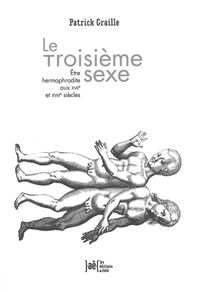
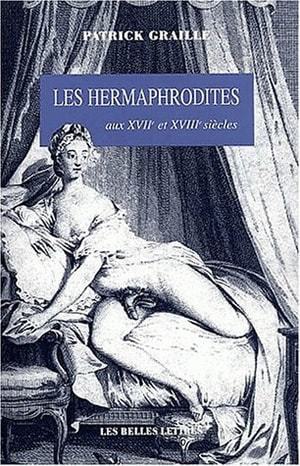
LES HERMAPHRODITES AUX XVIIE ET XVIIIE SIECLES
Belles Lettres - EAN : 9782251441900
Édition papier
EAN : 9782251441900
Paru le : 11 mai 2001
19,40 €
18,39 €
Bientôt disponible
Pour connaître votre prix et commander, identifiez-vous
Manquant provisoirement
Notre engagement qualité
-
 Livraison gratuite
en France sans minimum
de commande -
 Manquants maintenus
en commande
automatiquement -
 Un interlocuteur
unique pour toutes
vos commandes -
 Toutes les licences
numériques du marché
au tarif éditeur -
 Assistance téléphonique
personalisée sur le
numérique -
 Service client
Du Lundi au vendredi
de 9h à 18h
- EAN13 : 9782251441900
- Editeur : Belles Lettres
- Date Parution : 11 mai 2001
- Disponibilite : Provisoirement non disponible
- Barème de remise : NS
- Nombre de pages : 250
- Format : 1.80 x 13.50 x 21.00 cm
- Poids : 308gr
- Interdit de retour : Retour interdit
-
Résumé :
Whether openly or clandestinely, hermaphrodites fascinated scholars of the 17th and 18th centuries. These ambiguous beings, who contributed to such varied disciplines as literature, mythology, history, philosophy, anthropology, ethnology, the natural sciences, medicine, religion, justice, painting, engraving, and sculpture, etc., were, for a long period, ignored by critics. This essay attempts, by means of heterogeneous known and previously unpublished documents, to compensate for this lack of interpretations. Throughout the 17th and 18th centuries, in which early movements favoring sexual liberation existed side by side with repressive forces, hermaphrodites were often perceived in terms of their corporal duality, whether imaginary or real. For some, they incarnated perfection and neutrality — even an ideal ; for others, they represented otherness, a violation of codes and moral standards, the sort of ambiguity found in excess. When dissected — in the figurative sense of minutely analyzed, from the Latin word dissecare, "cut in half" — they were a source of new associations with old-world fables and, at the same time, with scientific texts whose approach vacillated between normality and suspicion, concealing coercive laws that gave rise to unconventional trials. Indissociable from the ideas, dreams and nightmares that surrounded, and were part and parcel of, their time period, hermaphrodites voiced, questioned, and sometimes rejected the reasonable ideals of Classicism and the Age of Enlightenment.
-
Biographie :
Enseignant-chercheur