Nous utilisons des cookies pour améliorer votre expérience. Pour nous conformer à la nouvelle directive sur la vie privée, nous devons demander votre consentement à l’utilisation de ces cookies. En savoir plus.

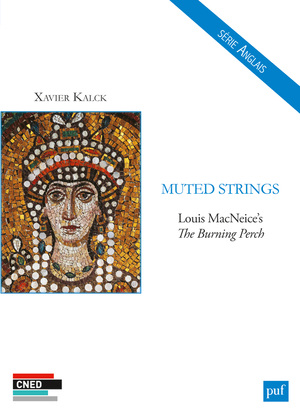
MUTED STRINGS - LOUIS MACNEICE'S THE BURNING PERCH
PUF - EAN : 9782130650737
Édition papier
EAN : 9782130650737
Paru le : 22 oct. 2015
21,00 €
19,91 €
Epuisé
Arrêt définitif de commercialisation
Notre engagement qualité
-
 Livraison gratuite
en France sans minimum
de commande -
 Manquants maintenus
en commande
automatiquement -
 Un interlocuteur
unique pour toutes
vos commandes -
 Toutes les licences
numériques du marché
au tarif éditeur -
 Assistance téléphonique
personalisée sur le
numérique -
 Service client
Du Lundi au vendredi
de 9h à 18h
- EAN13 : 9782130650737
- Réf. fournisseur : 385021
- Collection : CNED
- Editeur : PUF
- Date Parution : 22 oct. 2015
- Disponibilite : Epuisé
- Barème de remise : NS
- Nombre de pages : 168
- Format : 1.30 x 14.50 x 20.00 cm
- Poids : 208gr
-
Résumé :
Le contexte et les enjeux du recueil de Louis MacNeice, The Burning Perch.
Louis MacNeice (1907-1963) was a contradictory figure. He was an Irishman educated in England, where he spent most of his adult life; a rector’s son who became a skeptic; a poet, a travel writer, a dramatist for the BBC, a critic and a memorialist. He lectured in Classics and had a penchant for modernism; he was friends with W. H. Auden, Stephen Spender and Cecil Day-Lewis, yet remained unorthodox within the ‘Auden group’; a ‘Thirties poet,’ he leaned left but never joined the Communist Party; he fed on W. B. Yeats and T. S. Eliot, the better to come into his own. The Burning Perch, MacNeice’s last and posthumous collection, combines the poet’s various influences and concerns into a remarkably consistent, however paradoxical, personal project: a quest for poetic renewal and a perennial past. Embers or ashes, nightmare visions or ironic pictures, dramatic parables or simple limericks, these and many other varieties of dissonance come together in a ceaseless weave of archaized novelty and modernized memories. Through minute analysis of precise poems, this study shows how MacNeice’s music of disharmony succeeds in finding its own voice, which not to be false, must achieve a muted singing.