Nous utilisons des cookies pour améliorer votre expérience. Pour nous conformer à la nouvelle directive sur la vie privée, nous devons demander votre consentement à l’utilisation de ces cookies. En savoir plus.

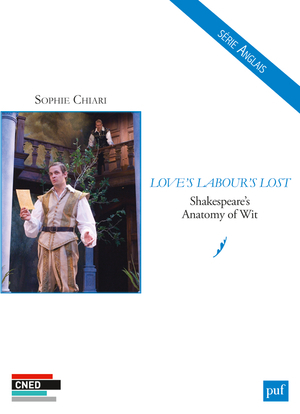
LOVE'S LABOUR'S LOST: SHAKESPEARE'S ANATOMY OF WIT
PUF - EAN : 9782130632924
Édition papier
EAN : 9782130632924
Paru le : 22 oct. 2014
21,00 €
19,91 €
Epuisé
Arrêt définitif de commercialisation
Notre engagement qualité
-
 Livraison gratuite
en France sans minimum
de commande -
 Manquants maintenus
en commande
automatiquement -
 Un interlocuteur
unique pour toutes
vos commandes -
 Toutes les licences
numériques du marché
au tarif éditeur -
 Assistance téléphonique
personalisée sur le
numérique -
 Service client
Du Lundi au vendredi
de 9h à 18h
- EAN13 : 9782130632924
- Réf. fournisseur : 371098
- Collection : CNED
- Editeur : PUF
- Date Parution : 22 oct. 2014
- Disponibilite : Epuisé
- Barème de remise : NS
- Nombre de pages : 192
- Format : 1.30 x 14.50 x 20.00 cm
- Poids : 240gr
-
Résumé :
Comédie virtuose et paradoxale publiée en 1598, Peines d’amour perdues (Love’s Labour’s Lost), de Shakespeare, est une pièce laboratoire qui porte déjà en elle tous les grands thèmes du dramaturge. Cet ouvrage se propose de la redécouvrir à partir d’une analyse de la langue, du contexte, et en s’intéressant aux tensions qu’elle met en jeu.
Love’s Labour’s Lost (1598) stages four young aristocratic suitors courting four French ladies in an improbable Arcadia. Anticipating on Joyce’s language games, this play cannot be seen as yet another festive comedy of love. It is a laboratory piece which reverses our initial expectations, poised as it is between comedy and tragedy, merriment and spleen, copia and nihilism. Here, Shakespeare paves the way for some of the major themes he will explore later on in his career, such as the value of knowledge, the problems of inheritance, or female power. He also examines the arbitrary relationships between verba and res in a dazzling series of puns and quibbles that bring language, letters and ciphers to the fore. A virtuoso comedy, Love’s Labour’s Lost keeps juggling with bawdy words as it puts dramatic codes upside down, so that it somewhat perversely fails to reach the expected happy ending.
Love’s Labour’s Lost: Shakespeare’s Anatomy of Wit reassesses this exuberant and extravagant piece through a close study of its political background, its religious overtones and its transgressive wordplay while also enhancing the play’s multiple resonances in the world of today.