Nous utilisons des cookies pour améliorer votre expérience. Pour nous conformer à la nouvelle directive sur la vie privée, nous devons demander votre consentement à l’utilisation de ces cookies. En savoir plus.

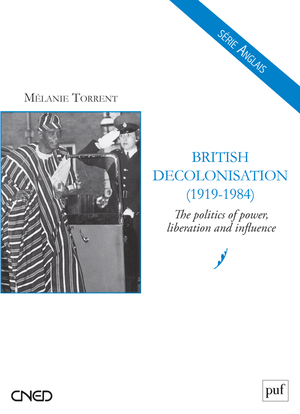
British Decolonisation (1919-1984)
PUF - EAN : 9782130606857
Édition papier
EAN : 9782130606857
Paru le : 18 déc. 2012
25,00 €
23,70 €
Disponible
Pour connaître votre prix et commander, identifiez-vous
Notre engagement qualité
-
 Livraison gratuite
en France sans minimum
de commande -
 Manquants maintenus
en commande
automatiquement -
 Un interlocuteur
unique pour toutes
vos commandes -
 Toutes les licences
numériques du marché
au tarif éditeur -
 Assistance téléphonique
personalisée sur le
numérique -
 Service client
Du Lundi au vendredi
de 9h à 18h
- EAN13 : 9782130606857
- Réf. éditeur : 313841
- Collection : CNED
- Editeur : PUF
- Date Parution : 18 déc. 2012
- Disponibilite : Disponible
- Barème de remise : NS
- Nombre de pages : 304
- Format : H:200 mm L:146 mm E:20 mm
- Poids : 379gr
-
Résumé :
Du statut de Westminster à la révolte des Mau Mau, de la partition de l’Inde à la « seconde colonisation en Afrique », des grèves dans les Caraïbes aux compromis dans le Pacifique, cet ouvrage examine les spécificités de la décolonisation britannique dans le monde du XXe siècle.
The end of the European empires undoubtedly stands as the major transformation of the twentieth-century world. Most mo-mentous, perhaps, was that of the British empire, which had combined the largest area of direct rule with the greatest sphere of informal power. Reflecting on the vivid controversies about the nature, causes, pace and extent of British decolonisation, this study analyses the long history of the end of the British empire, from the Treaty of Versailles to the Sino-British Treaty for the handover of Hong Kong. Beyond the high tide of independences, late ends of empire and remaining colonial outposts are crucial to understand the dynamics of British decolonisation, as are the early transformations of the white Commonwealth and the multiple forms of anti-colonial protest across the interwar empire. The history of British decolonisation is one of crossroads and encounters—theoretical, historical and geographical. It is about individual men and women across societies, international relations and transnational networks, structural changes and constraints, negotiations, repression and armed conflicts, and the (re)definition of the nation in the domestic and international spheres. From India to Belize, Vanuatu to Zimbabwe, Malaya to Britain itself, the study of decolonisation demonstrates the achievements, limits and ambiguities of colonial liberation in the twentieth century.