Nous utilisons des cookies pour améliorer votre expérience. Pour nous conformer à la nouvelle directive sur la vie privée, nous devons demander votre consentement à l’utilisation de ces cookies. En savoir plus.

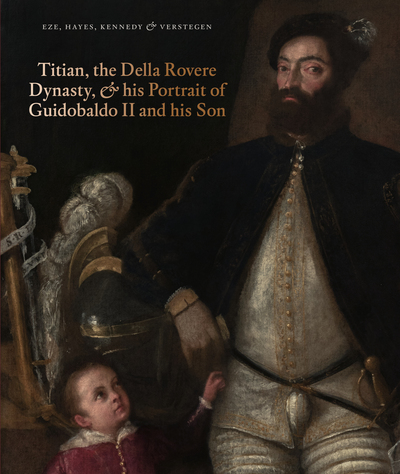
TITIAN, THE DELLA ROVERE DYNASTY, AND HIS PORTRAIT OF GUIDOBALDO II AND HIS SON
Holberton - EAN : 9781913645090
Édition papier
EAN : 9781913645090
Paru le : 5 nov. 2021
25,00 €
23,70 €
Disponible
Pour connaître votre prix et commander, identifiez-vous
Notre engagement qualité
-
 Livraison gratuite
en France sans minimum
de commande -
 Manquants maintenus
en commande
automatiquement -
 Un interlocuteur
unique pour toutes
vos commandes -
 Toutes les licences
numériques du marché
au tarif éditeur -
 Assistance téléphonique
personalisée sur le
numérique -
 Service client
Du Lundi au vendredi
de 9h à 18h
- EAN13 : 9781913645090
- Editeur : Holberton
- Date Parution : 5 nov. 2021
- Disponibilite : Disponible
- Barème de remise : NS
- Nombre de pages : 96
- Format : 1.50 x 22.20 x 26.60 cm
- Poids : 728gr
- Résumé : Le portrait Klesch, par Titien, de Guidobaldo II avec son fils Francesco Maria représente le duc d’Urbino dans ses pleins pouvoirs de commandant suprême des troupes papales avec son héritier à ses côtés. Ce rare double portrait en pied vient seulement d’être attribué à Titien après avoir entrepris des analyses et une restauration minutieuses qui révèlent une belle peinture au style « non finito » avec de superbes touches d’empâtement totalement typiques au maître. Tout ceci est illustré et développé dans ce nouveau livre. Titian provided portraits for the greatest men and women of Europe, Charles V and Philip II of Spain primary among them. For years the Klesch portrait was dismissed as a workshop product – partly because poor condition hid its true quality, but also because it was not believed that Titian could have deigned to create one for Guidobaldo, whose father Guidobaldo della Rovere (1514–1574) and family had a long history of patronizing the artist. Recent research, however, has thrown Guidobaldo’s geopolitical significance into relief. He was supreme commander of Venice, the Papal States and then Spain. He sent thousands of soldiers to the major conflicts of his day, particularly the defense of Malta (1565) and the Battle of Lepanto (1571) and his engineers were sought throughout Europe for their ingenuity. In this volume full of new research, Ian Verstegen reveals that Guidobaldo was not peripheral but central to Italian politics and was regarded at several points in history as a key figure who could bring peace or who could influence major conflicts on the Italian peninsula, particularly the War of Siena, and then Pope Paul IV’s offensive war against Spain. Anne-Marie Eze gives the first comprehensive examination of the painting’s provenance, outlining the portrait’s vicissitudes and reception at different moments in its near 500-year history, reexamining received wisdom about its past ownership, and presenting new documentary evidence to expand on and fill gaps in our knowledge of its whereabouts. Finally, Matthew Hayes and Ian Kennedy reflect on the technique, date, recent conservation, and authorship of the painting, proving it to be a masterpiece that only the great Titian could have created.