Nous utilisons des cookies pour améliorer votre expérience. Pour nous conformer à la nouvelle directive sur la vie privée, nous devons demander votre consentement à l’utilisation de ces cookies. En savoir plus.

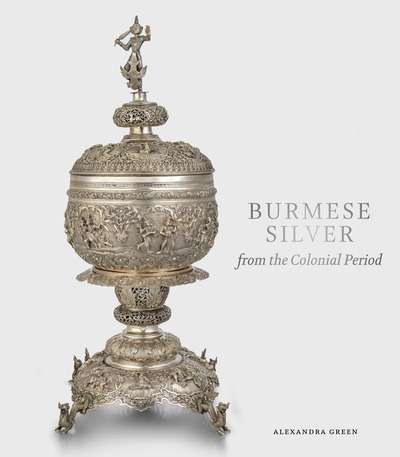
BURMESE SILVER FROM THE COLONIAL PERIOD - ILLUSTRATIONS, COULEUR
Holberton - EAN : 9781912168279
Édition papier
EAN : 9781912168279
Paru le : 16 sept. 2022
70,00 €
66,35 €
Disponible
Pour connaître votre prix et commander, identifiez-vous
Notre engagement qualité
-
 Livraison gratuite
en France sans minimum
de commande -
 Manquants maintenus
en commande
automatiquement -
 Un interlocuteur
unique pour toutes
vos commandes -
 Toutes les licences
numériques du marché
au tarif éditeur -
 Assistance téléphonique
personalisée sur le
numérique -
 Service client
Du Lundi au vendredi
de 9h à 18h
- EAN13 : 9781912168279
- Editeur : Holberton
- Date Parution : 16 sept. 2022
- Disponibilite : Disponible
- Barème de remise : NS
- Nombre de pages : 256
- Format : 3.00 x 25.40 x 28.70 cm
- Poids : 1.87kg
- Résumé : This stunning catalogue presents an exceptional collection of rare Burmese silver. Accompanied by detailed photographs and explanatory texts, this ground-breaking book proposes a new way of looking at Burmese silver. Names, dates, places, and stories – identifying the who, when, where, and what of Burmese silver has been the focus of publications on the topic. Are these questions the best way to understand silver, however? Alexandra Green argues that they are not. Too few pieces provide reliable information about silversmiths, production locations, and dates to allow for a comprehensive understanding of the subject. Instead, a close examination of silver patterns reveals strong links with Burmese art history reaching as far back as the Bagan period (11th to 13th centuries), connections with contemporary artistic trends, and participation within the wider world of silversmithing. The first European to write about Burmese silver was H L Tilly, a colonial official from the late 19th into the early 20th century. Tasked with collecting objects for various fairs and exhibitions, he took an interest in Burmese art, publishing articles and books from the 1880s onwards. While much of what he wrote was factually inaccurate and coloured by the prejudices and stereotypes common at the time, his two volumes on Burmese silver published in 1902 and 1904 contain pictures of pieces from the early to mid 19th century. These enable a reconstruction of how silver designs evolved as the country was absorbed into the Indian Raj, and British and other Westerners became consumers of local silver products. Tilly was also correct in his interest in silver designs. Green uses the visual information from his books to describe the continuities and innovations of designs found on silver from the mid 19th through the mid 20th century, and she places these trends within local, regional, and global flows of ideas. Many studies of Burmese silver have been plagued by a lack of understanding of the Burmese context. In contrast, Green examines silver from a local perspective, drawing on Burmese texts and information that allows for a nuanced view of the motifs, designs, and patterns that appear repetitively on silver pieces. Using Graham Honeybill’s collection, formed over many years, as a basis, she explores how designs and patterns circulated around the country and were innovatively combined and recombined on pieces by silversmiths producing objects for Burmese, Western, and commercial clients.