Nous utilisons des cookies pour améliorer votre expérience. Pour nous conformer à la nouvelle directive sur la vie privée, nous devons demander votre consentement à l’utilisation de ces cookies. En savoir plus.

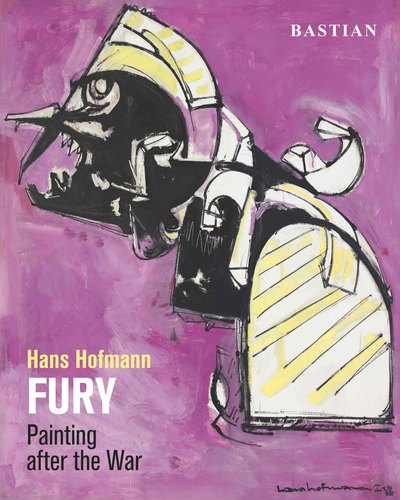
HANS HOFMANN: FURY: PAINTING AFTER THE WAR
Holberton - EAN : 9781911300908
Édition papier
EAN : 9781911300908
Paru le : 19 juin 2020
30,00 €
28,44 €
Disponible
Pour connaître votre prix et commander, identifiez-vous
Notre engagement qualité
-
 Livraison gratuite
en France sans minimum
de commande -
 Manquants maintenus
en commande
automatiquement -
 Un interlocuteur
unique pour toutes
vos commandes -
 Toutes les licences
numériques du marché
au tarif éditeur -
 Assistance téléphonique
personalisée sur le
numérique -
 Service client
Du Lundi au vendredi
de 9h à 18h
- EAN13 : 9781911300908
- Editeur : Holberton
- Date Parution : 19 juin 2020
- Disponibilite : Disponible
- Barème de remise : NS
- Nombre de pages : 48
- Format : 0.70 x 24.00 x 30.00 cm
- Poids : 392gr
- Interdit de retour : Retour interdit
- Résumé : Accompagnant une exposition au BASTIAN, à Londres, cette étonnante publication présente les oeuvres de l’artiste américain d’origine allemande, Hans Hofmann (1880-1966), réalisées à la fin de la Seconde Guerre Mondiale et après. Les oeuvres abstraites et angulaires de Hofmann (tel que Fury No.1) personnifient les insécurités de l’époque. C’est aussi le moment où il évolua vers des formes floues et ambiguës qui devinrent la marque de fabrique du mouvement de l’Expressionnisme Abstrait. Renowned as both an artist and teacher, Hofmann established his first art school in Munich in 1915. Built on the contemporary ideas regarding colour and form of Cézanne, the Cubists and Kandinsky, his work laid the foundations for his reputation as a forward-thinking artist. After relocating to the United States in 1932, he then opened schools in both New York and Provincetown, immersing himself within America’s growing avantgarde art scene. His teaching had a significant influence on post-War American artists, including Helen Frankenthaler, Lee Krasner and Joan Mitchell – artists who would later lead the Abstract Expressionism movement. The works presented here span from 1942 to 1946. Whilst demonstrating Hofmann’s development towards abstraction, the paintings still reveal an identifiably representational quality which nod to his figurative beginnings; linear paintings such as The Virgin (1946) particularly emphasise this artistic trajectory. Primarily known for his expressive use of bold, often primary colours, the palette used in these paintings consists predominantly of vivid, bright colours and contrasting dark tones, epitomizing the conflicted post-War feeling. Hofmann’s work during the 1940s also saw him garner the support of several key figures in the artistic scene, including the renowned gallerists and dealers Peggy Guggenheim, Betty Parsons, and Samuel M. Kootz. A particularly important moment in his career – aged 64 at the time – was his first solo exhibition in New York in 1944 at Peggy Guggenheim’s gallery Art of This Century, considered ‘a breakthrough in painterly versus geometric abstraction that heralded abstract expressionism’ by the influential art critic Clement Greenberg.